
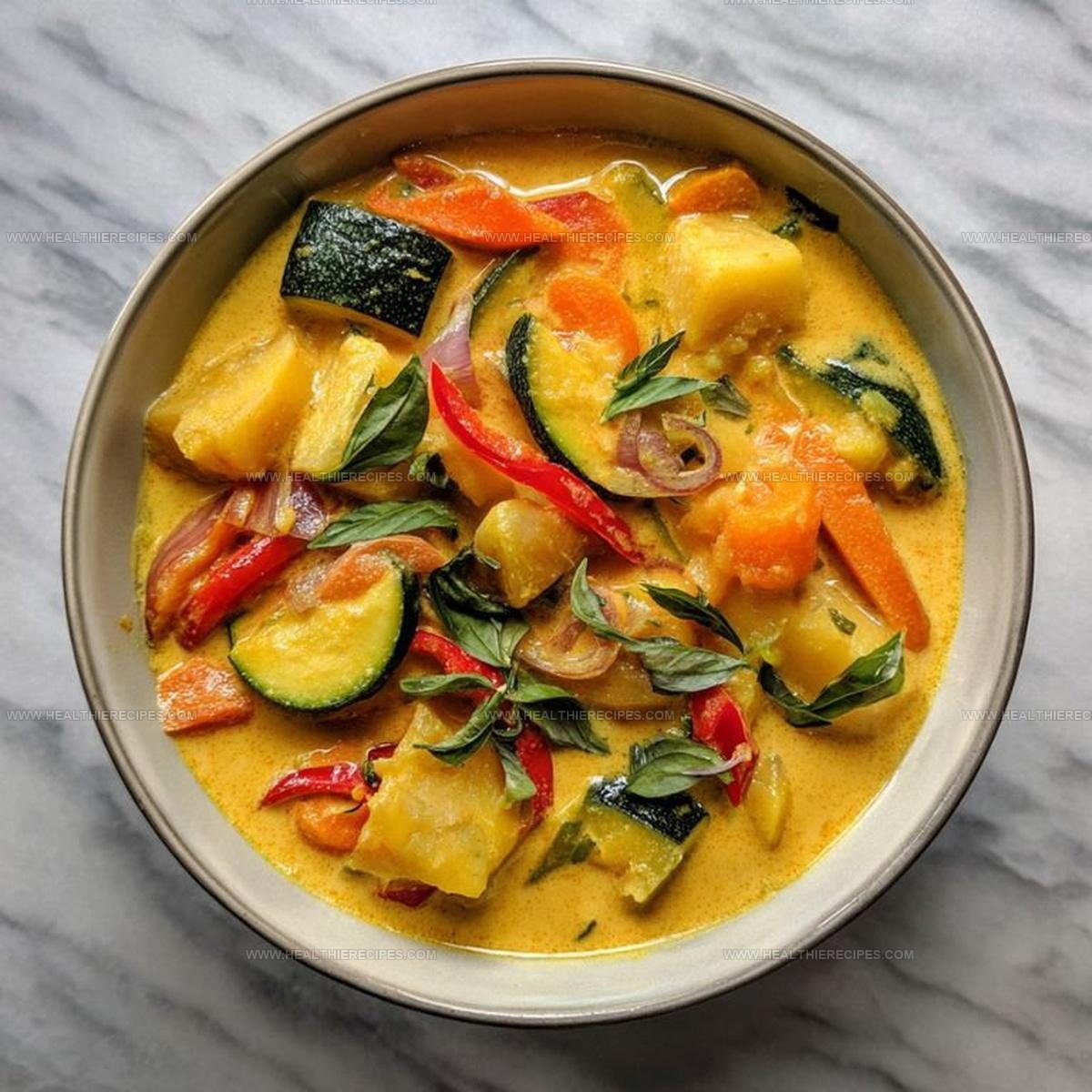
Aromatic Vegetarian Thai Yellow Curry Recipe with Lemongrass

Vegetarian Thai yellow curry with lemongrass recipe brings warmth and comfort to any dinner table with its aromatic spices and creamy coconut base.
Bold flavors meet plant-based eating in one of Thailand's most beloved dishes that satisfies both seasoned curry enthusiasts and newcomers.
The fragrant profile makes it feel like you've stepped into a bustling Bangkok street market without leaving home.
Perfect for weeknight dinners or casual gatherings, it comes together quickly while delivering impressive results.
The golden hue alone is enough to brighten any meal, and the balance of savory, slightly sweet, and aromatic notes creates something truly memorable.
Serve it over rice or noodles for a complete meal that feels both nourishing and exciting.
Make tonight special with a bowl of sunshine that proves plant-based cooking can be just as satisfying as any meat-centered dish.
All About Vegetarian Thai Yellow Curry Goodness
What Ingredients Make Up Vegetarian Thai Yellow Curry with Lemongrass
Curry Base:Vegetables:Finishing Touches:Which Tools Work Best For Vegetarian Thai Yellow Curry
Complete Steps For Vegetarian Thai Yellow Curry with Lemongrass
Prepare Your Vegetables
Start by peeling and dicing your 2 medium Yukon gold potatoes into bite-sized chunks. Slice your 2 carrots into thick rounds, then julienne both your 1 red bell pepper and 1 yellow bell pepper into thin strips.
Slice your 1 zucchini into rounds, and chop your 1 small sweet onion into pieces. Mince your 4 garlic cloves and grate your 2 tablespoons of fresh ginger.
Take your 2 stalks of lemongrass, trim the dry ends, and bruise them gently by crushing them with the back of your knife to release their aromatic oils. Set everything aside on your counter.
Create Your Spice Base
Pour a small splash from your 1 can (15 oz) of full-fat coconut milk into the bottom of your slow cooker. Use a spoon to blend together these ingredients into a smooth paste:
Add your minced garlic and grated ginger to this mixture and stir everything together.
If using Thai chilies for heat, add your 1-2 Thai chilies now.
Add The Vegetables To The Slow Cooker
Transfer all your prepared vegetables into the slow cooker with the spice mixture.
Layer in your diced potatoes, carrot rounds, bell pepper strips, zucchini slices, and chopped onion.
Pour In The Liquids
Pour the remaining coconut milk into the slow cooker, then add your 1 ½ cups of vegetable broth.
Stir in your 1 tablespoon of soy sauce or tamari and your 1 tablespoon of brown sugar or coconut sugar. Give everything a good stir to distribute the flavors evenly throughout.
Add Lemongrass And Begin Cooking
Place your bruised lemongrass stalks on top of the mixture, then cover the slow cooker with its lid. Cook on high for 4 hours or on low for 6 to 7 hours, until your potatoes are fork-tender and the broth has turned into a creamy, golden curry sauce.
The longer cooking time on low will give the flavors more time to develop and blend together.
Brighten The Flavors
About 10 minutes before serving, squeeze the juice from your 1 lime into the curry and stir it through.
Fish out and discard the lemongrass stalks from the pot. Taste the curry and add salt as needed.
Serve Your Curry
Ladle your curry over cooked jasmine rice or Thai curry noodles onto individual plates. Garnish each bowl with fresh Thai basil or cilantro, sliced red chili, and lime wedges on the side for your guests to use as they like.
Quick Ideas To Elevate Vegetarian Thai Yellow Curry
Fun Ingredient Swaps for Thai Yellow Curry
Serving Thai Yellow Curry For Any Meal
Easy Storage Tips For Vegetarian Thai Yellow Curry with Lemongrass
FAQs
How do I know if my lemongrass is fresh enough to use?
Fresh lemongrass has a pale green color and smells citrusy when you crush it. Dried lemongrass works too, but fresh gives better flavor.
Can I use regular milk instead of coconut milk?
Coconut milk creates the creamy texture this curry needs. Regular milk doesn’t have the same richness, so it’s best to stick with coconut.
What if I don’t have all the vegetables listed?
Use whatever vegetables work for your kitchen. Just cut them into similar sizes so they cook evenly. Broccoli, green beans, and mushrooms work great.
Should I cut my vegetables before or after adding them to the slow cooker?
Cut them before. Uniform pieces cook at the same rate and taste better than chunks of different sizes.
Is the curry paste spicy?
Most curry paste has some heat, but the coconut milk balances it out. If your family prefers milder, reduce the paste amount or skip the chilies.
Can I add protein to this curry?
Chickpeas, tofu, or kidney beans add substance without changing the cooking time. Toss them in with the vegetables.
Vegetarian Thai Yellow Curry with Lemongrass Recipe
- Total Time: 4 hours 15 minutes (high) or 6-7 hours (low) 15 minutes
- Yield: 4 1x
Description
Slow cooked vegetarian thai yellow curry with lemongrass brings together aromatic spices, creamy coconut milk, and tender vegetables that simmer together until the flavors meld into something truly satisfying. Your kitchen fills with the fragrant scent of lemongrass and curry paste as this comforting dish comes together with minimal effort on your part.
Ingredients
Curry Base:
- 1 tablespoon Thai yellow curry paste
- 1 teaspoon ground turmeric
- 1 tablespoon curry powder
- 1 can (15 ounces) full-fat coconut milk
- 1 1/2 cups vegetable broth
- 1 tablespoon soy sauce or tamari
- 1 tablespoon brown sugar or coconut sugar
Vegetables:
- 2 medium Yukon gold potatoes
- 2 carrots
- 1 red bell pepper
- 1 yellow bell pepper
- 1 zucchini
- 1 small sweet onion
- 4 garlic cloves
- 2 tablespoons fresh ginger
- 2 stalks lemongrass
- 1–2 Thai chilies
Finishing Touches:
- salt
- juice of 1 lime
- fresh Thai basil or cilantro
- sliced red chili
- lime wedges
- cooked jasmine rice or Thai curry noodles
Instructions
- Peel and dice your 2 medium Yukon gold potatoes into bite-sized pieces, slice your 2 carrots into thick rounds, julienne both the red and yellow bell peppers, slice your 1 zucchini, chop your 1 small sweet onion, mince your 4 garlic cloves, grate your 2 tablespoons fresh ginger, and gently bruise your 2 lemongrass stalks by crushing them with a knife to release their aromatic oils.
- In your slow cooker, pour a splash of the 15 oz can of coconut milk and stir in 1 tablespoon Thai yellow curry paste, 1 teaspoon ground turmeric, and 1 tablespoon curry powder until the mixture turns smooth and uniform.
- Mix your minced garlic, grated ginger, and 1-2 Thai chilies if using into the curry paste base.
- Add your diced potatoes, carrot rounds, julienned bell peppers, zucchini slices, and chopped onion to the slow cooker and toss everything together.
- Pour the remaining coconut milk from the can, 1 ½ cups vegetable broth, 1 tablespoon soy sauce, and 1 tablespoon brown sugar into your slow cooker and stir until all ingredients blend together evenly.
- Place your bruised lemongrass stalks into the mixture, cover your slow cooker, and cook on high for 4 hours at 210 degrees Fahrenheit or on low for 6-7 hours at 190 degrees Fahrenheit until your potatoes break apart easily when pierced with a fork.
- About 10 minutes before you’re ready to eat, remove the lemongrass stalks and squeeze the juice of 1 lime into your curry to add brightness and tang.
- Ladle your finished curry over jasmine rice or Thai curry noodles and top each serving with fresh Thai basil or cilantro, sliced red chili, and lime wedges for added flavor.
Notes
- Cut all your vegetables into similar-sized pieces so everything finishes cooking at the same time and stays tender rather than mushy or undercooked.
- Bruise the lemongrass stalks by crushing them lightly with your knife handle before adding them to release the aromatic oils that flavor the entire dish.
- Bloom your curry paste and spices in a bit of coconut milk at the slow cooker’s base before adding other ingredients, which deepens and rounds out the spice flavors.
- Add the lime juice just before serving rather than at the beginning, since heat causes the brightness to fade and leaves the curry tasting flat and one-dimensional.
- Prep Time: 15 minutes
- Cook Time: 4 hours (high) or 6-7 hours (low)
- Category: Vegetarian
- Method: Slow Cooking
- Cuisine: Thai
Nutrition
- Serving Size: 4
- Calories: 320 kcal
- Sugar: 7 g
- Sodium: 450 mg
- Fat: 22 g
- Saturated Fat: 19 g
- Unsaturated Fat: 3 g
- Trans Fat: 0 g
- Carbohydrates: 24 g
- Fiber: 5 g
- Protein: 4 g
- Cholesterol: 0 mg
Logan Mercer
Founder & Lead Recipe Innovator
Expertise
Balanced Recipe Building, Whole-food Nutrition, Ingredient Substitution for Health, Everyday Cooking Solutions
Education
- Degree: Bachelor of Science in Culinary Nutrition
- Focus: Blending culinary skills with evidence-based nutrition science to create food that’s both delicious and nourishing.
Bauman College (Online & Santa Cruz, CA)Logan Mercer is the founder and lead recipe innovator behind HealthierRecipes.com, where flavor and nutrition go hand in hand. With a Bachelor of Science in Culinary Nutrition from Johnson & Wales University and holistic chef training from Bauman College, Logan blends culinary skill with evidence-based nutrition. Inspired by seasonal ingredients and whole-food cooking, he creates balanced, approachable recipes that make healthy eating satisfying, practical, and full of flavor.